UDL Blog
Module 1 Activities
Minds On:
In one of the last trainings that I took recently, I felt that was not preparation regarding the material. There was no process documents or manuals available and most of I was offered was personal notes from other employees about some of the processes. It was hard to concentrate on the explanations that were being given to me, while at the same time I was trying to make my own notes, so I wouldn’t forget the instructions. I felt overwhelmed. It would be great to have some material prepared in advance, where I could just follow along the explanation being given.
Setting Goals:
1. Understand UDL’s core principles
2. Apply UDL to onboarding materials
3. Clarify a possible career direction
Checklist for Success:
I can explain UDL’s three core principles in my own words without notes
I’ve identified at least 2 or 3 concrete changes to make to current onboarding materials
I’ve tried applying one UDL strategy in a real work task (document, training session, or presentation)
I’ve reflected in writing on whether this course sparked interest in further education-related learning.
Strengths I bring:
Strong organizational skills: I naturally think about structure, clarity, and process, which supports good material design;
My own experience with onboarding: I understand firsthand where new coordinators tend to get confused or overwhelmed;
Practical workplace perspective: I can ground abstract concepts in real examples from my role.
Skills to Develop:
Formal facilitation techniques for engaging diverse adult learners, not just writing materials;
Confidence presenting or leading a training session (versus supporting logistics behind the scenes);
A stronger theoretical grounding in adult learning principles to complement my practical experience.
What is UDL?
Click on the T-Chart below to see the larger version.
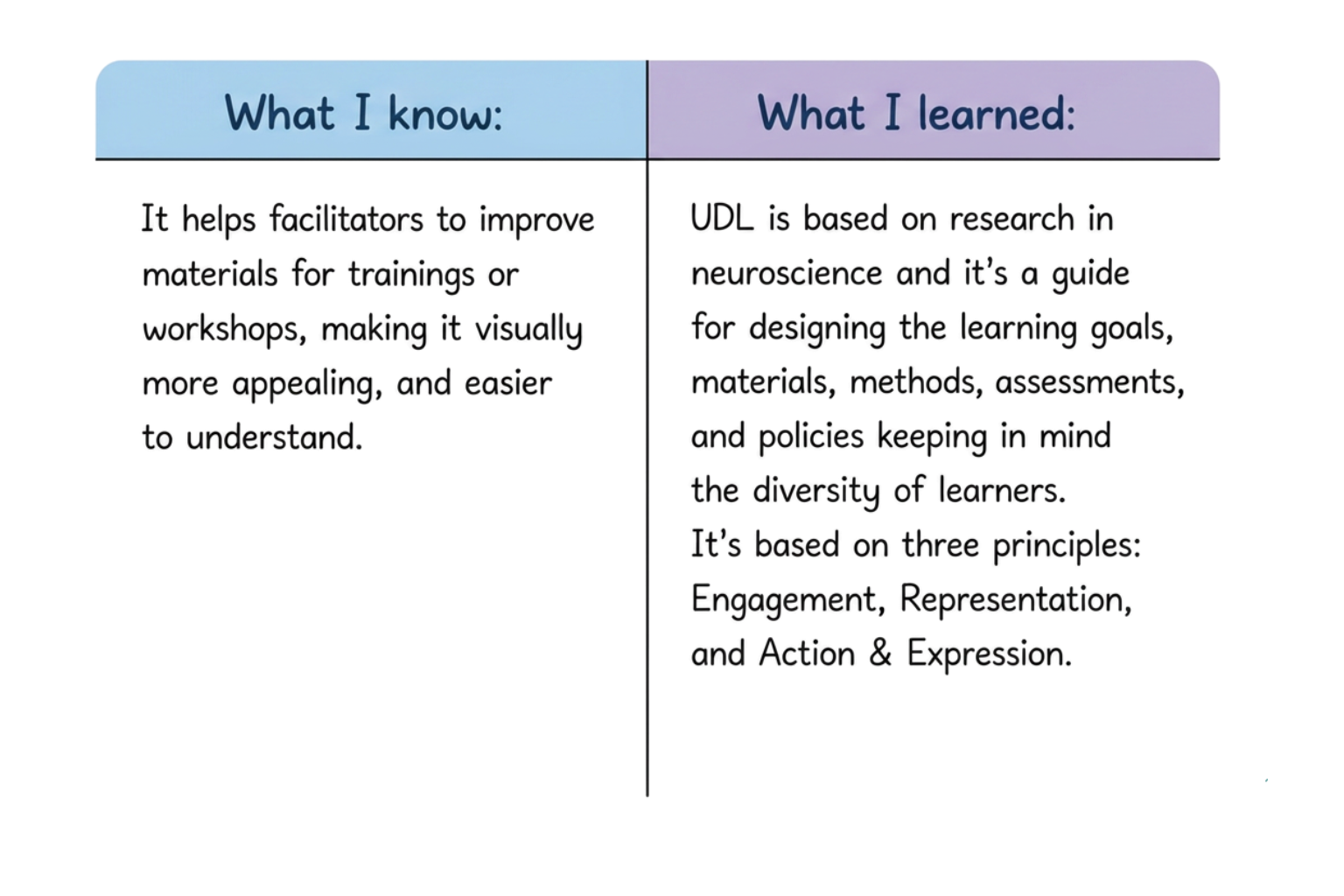
Principles of UDL:
How each principle can be applied:
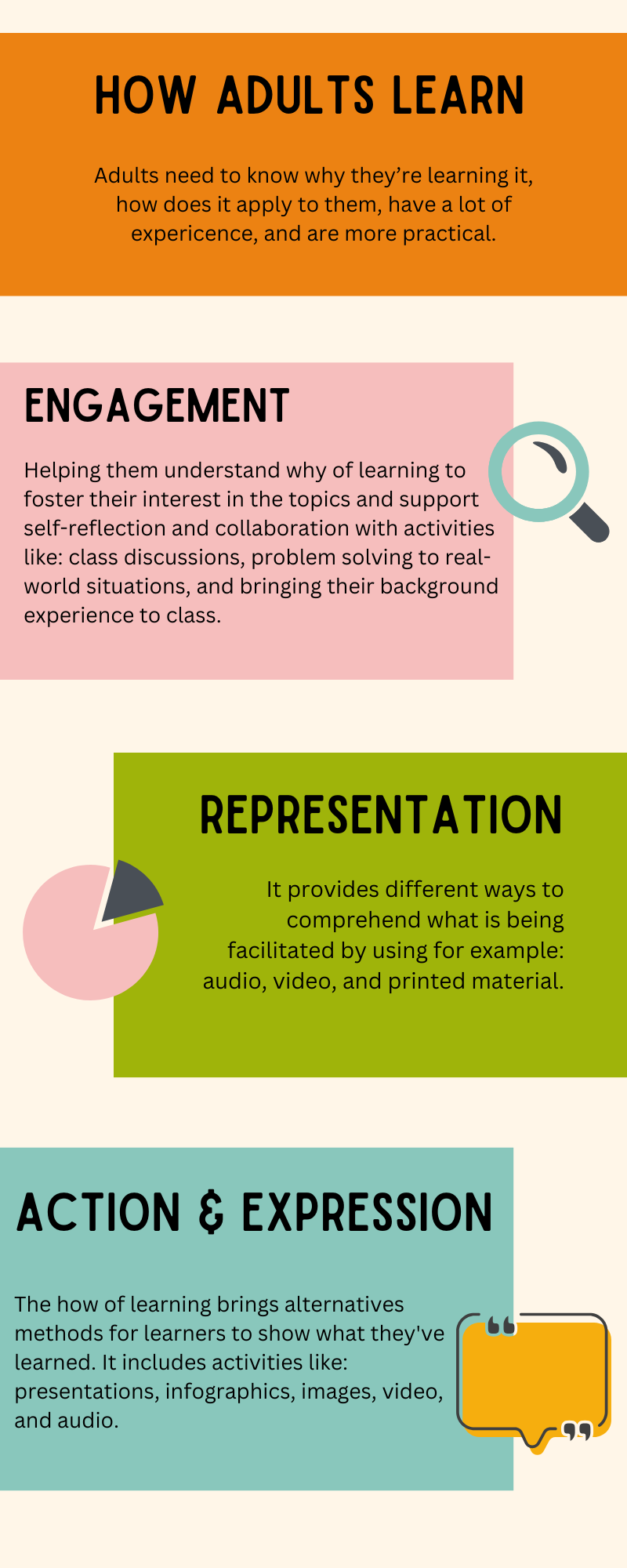
1. The facilitator can make learning relevant by connecting the content of the course to the learner’s real-world experiences and goals, instead of just presenting information in isolation. This way they can reflect on their own experiences with the topic and feel motivated. For example, asking learners to share a recent situation where the topic applies helps them see its practical value, increasing their interest and engagement throughout the course.
2. The facilitator can present information in different ways by offering the same content through multiple formats, rather than relying on just one method like text or lecture. For example, explaining a concept verbally while also providing a visual chart allows learners who process information differently to engage with the material in the way that works best for them.
3. The facilitator can offer learners options to demonstrate learning by allowing them to choose how they participate in class and show what they’ve learned. For example, learners could complete a written summary, prepare a verbal presentation, or even create a visual material to demonstrate the same learning outcome. This way the barriers tied to a single mode of assessment can be removed, giving each learner an opportunity to express their understanding.
How Adults Learn
Clink on the infographic below to see a larger version.
Creating a Positive Learning Environment:
I could open a training session for new admin coordinators with the activity “Four Corners”, using the same four animals to break the ice before diving into onboarding content. I like that it’s low-pressure and gets people moving early, helping to ease anxiety in a new role. The benefits that I can see include helping me quickly understand my learners’ working styles and building comfort speaking up. I could adapt the follow-up questions to be specific to the role, like “Which animal represents how you handle competing deadlines?” to make it more relevant to their daily tasks.